

![[EP10] PR in Korea: Why Every Company Needs a PR Professional](https://static.pulitzer.ai/homepage-blog/3350/2026/06/18/191051_d1f9c09d-5569-4840-9166-b1871d115edc/ChatGPT_Image_2026년_6월_18일_오후_07_10_00.png)
[EP10] PR in Korea: Why Every Company Needs a PR Professional
New to PR in Korea? Learn what PR actually does, why it can't be replaced by advertising, and how to make the case for your own value inside your organization.
PR Study for Beginners — EP10
In the last article, we covered how to handle negative coverage — from factual errors and distorted reporting to stories that are accurate but damaging. We walked through how to approach journalists when something goes wrong, and why staying on top of your news clipping is the fastest way to protect your response window.
We've reached the final article in the PR Study for Beginners series. Over the past nine articles, we've covered how Korean media works, how to build journalist relationships, how to write and distribute press releases, how to pitch feature stories, how to monitor coverage, and how to handle negative reporting. This last one goes back to basics.
If you've spent any time in PR, you've probably faced this question — from a skeptical executive, a budget review, or even yourself: why does media relations actually matter? PR is notoriously difficult to quantify. From the outside, it can look like a cost center. When budgets tighten, it's often one of the first things cut. 😢
This article is for anyone who's had to make the case for PR — or who simply wants to understand its value more clearly.
Why advertising can't replace PR
PR, at its core, is every communication activity aimed at building and maintaining favorable relationships with the people who matter to your organization — customers, investors, partners, employees, journalists, regulators, and the broader public. No matter how strong your product or technology is, without the ability to communicate that value credibly, it stays invisible.
A common response at this point is: "Can't we just run ads?📺"
Advertising and PR serve different purposes. Advertising is a one-way message — controlled, paid, and understood by audiences as such. It can create awareness and drive a specific action. What it can't do is manage the full complexity of how a company is perceived across multiple audiences over time, or substitute for the kind of trust that comes from third-party coverage in a credible news outlet. PR and marketing overlap in places, but neither fully replaces the other.
Media relations specifically uses news coverage — one of the highest-trust content formats available — to build and protect a company's reputation. That means deciding which of your company's stories are worth telling publicly, shaping those stories into coverage, cultivating journalist relationships that make favorable coverage more likely, amplifying positive articles, and correcting the record when something goes wrong. PR professionals also support executive communications, manage reputational risk, and provide communications infrastructure for major events and announcements. Over time, all of that work compounds into something that can't be manufactured quickly: a recognized, trusted identity in your industry.
The hard part is that none of this shows up cleanly in a quarterly report. PR professionals do the work, but rarely get to take visible credit for it. 😞
What companies without PR tend to miss
The value of PR becomes clearest when you look at companies that don't have it.
There's a saying in the industry: executive confidence is inversely proportional to public recognition. Companies with strong products and talented teams, but no media presence, are largely unknown outside their immediate circles. At a trade show or industry event, the booths that draw a crowd aren't always the most visually impressive ones — they're the ones people have seen before, read about, or heard mentioned somewhere. Some of those people are potential investors and buyers.
The belief that "our product speaks for itself" is understandable, but it leads to missed opportunities. When a company hits a genuine milestone, outlets that have no prior relationship with that company have little reason to cover it. Journalists need some basis for trust before they'll allocate column space to an unfamiliar name.
PR matters most at the moments that matter most
Two situations in particular expose the gap between companies that have invested in PR and those that haven't.
Fundraising and IPO A company's accumulated press coverage tells a story — of growth, credibility, and momentum — that no pitch deck can fully replicate. Investors do their own research, and the articles they find form part of their due diligence. Companies that scramble to hire a PR agency in the months before an IPO rarely achieve the same results as those that have been building their media presence consistently over years. A sudden surge of coverage in a short window can actually raise questions rather than inspire confidence.
ⓒPulitzer AI
Crisis management Operational failures, project setbacks, personnel issues, security incidents — no company is immune. When something goes wrong, the difference between a PR team and no PR team can be significant.
Consider a startup that expands internationally and has to return to the domestic market. With a PR professional managing the narrative, the story becomes one of hard-won experience and a sharpened domestic strategy. Without one, the coverage tends to focus on failure — "What went wrong?" and "Who's responsible for the losses?" — a framing that makes recovery harder.
Crisis situations also expose executives to serious reputational risk. The way a CEO communicates during a difficult period can either stabilize the situation or accelerate its deterioration. Preparing messaging strategy and managing tone in those moments is squarely within the PR professional's remit. It's why PR is sometimes described as the function that shines brightest when everything else is under pressure.
In calmer times, though, that contribution is easy to overlook. Coverage counts don't translate directly into revenue. PR professionals often find themselves in the position of being blamed when things go badly and receiving little credit when things go well. 😅
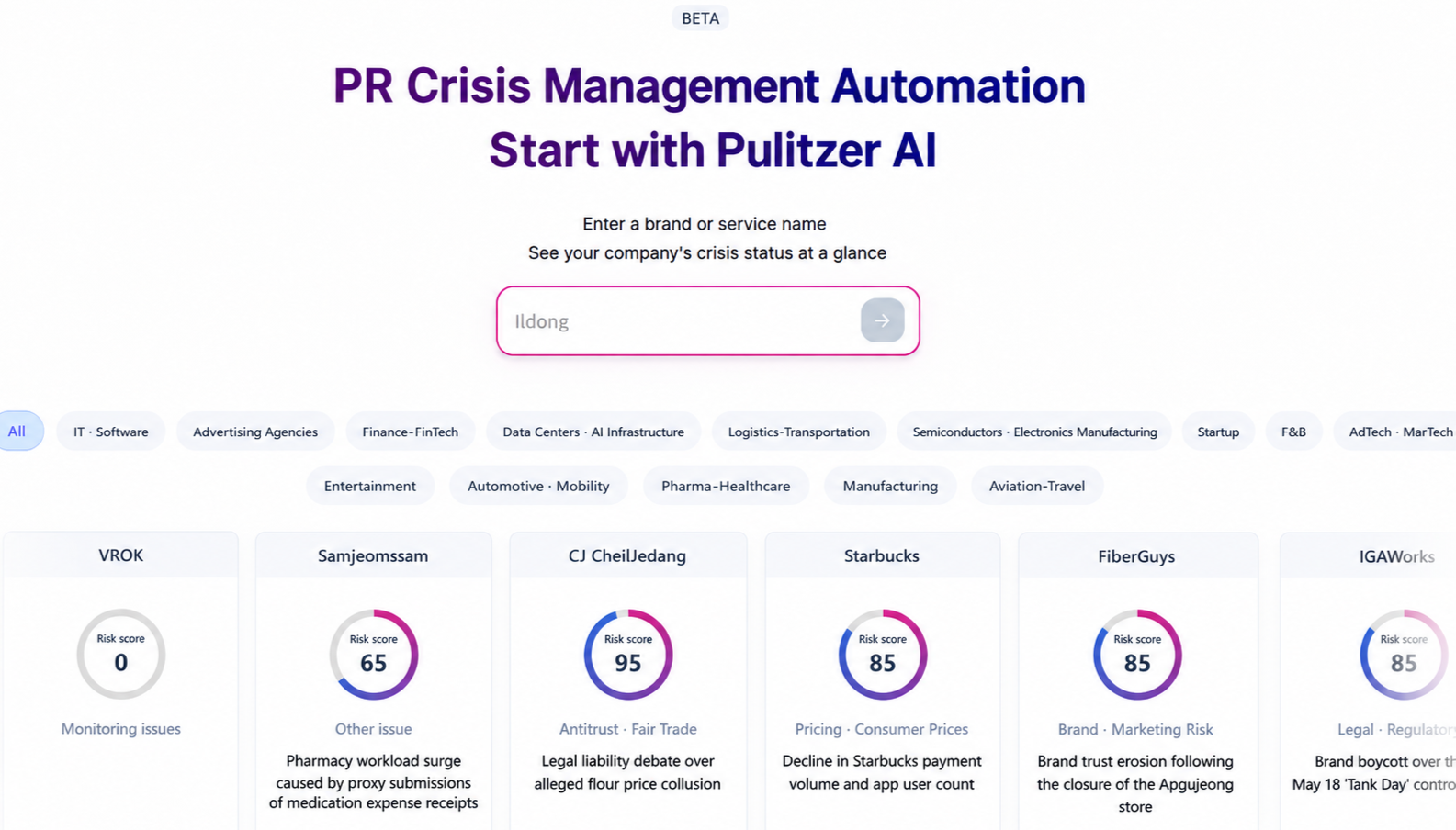
🚨See your company's crisis status at a glance ➡️ Try Pulitzer AI Crisis Management
Pulitzer AI's crisis monitoring covers news, social media, and online communities in one dashboard, alongside competitor and industry trends.
How PR professionals can define their own value and build internal buy-in

ⓒChatGPT
Sustainable PR work requires more than hitting coverage targets. It requires being able to articulate what you do and why it matters — to yourself and to the people around you.
Start by recording more than just what ran. Track how a piece of coverage came about, and what happened because of it. An investor who came into a meeting having already read your company's articles. A job applicant who found out about the company through a news story. These outcomes don't show up in standard KPI dashboards, but they are real and demonstrable. Accumulated over time, they become the strongest possible argument for the value of your work.
Internal visibility matters too. PR results are easy to overlook if no one sees them. When a strong article runs, share it internally — and add one sentence explaining the strategy behind it. That small habit shifts how colleagues and leadership perceive the PR function: not as a team that "gets articles placed," but as a team that actively shapes how the company is seen.
Finally, on the question of AI: yes, more PR tasks are becoming automatable. But the core of what makes PR valuable, building genuine trust with journalists, reading complex situations and responding with judgment, navigating human relationships, remains beyond what automation can fully replicate. The PR professionals who use AI tools to eliminate repetitive work, and reinvest that time in relationship-building and strategic thinking, are the ones who will be most effective in the years ahead. ✨
Pulitzer AI makes PR easier at every stage
From press release drafting to journalist outreach, news clipping, and performance tracking, Pulitzer AI supports the full PR workflow so you can spend less time on manual tasks and more time on the work that actually requires judgment. Make PR easier, grow better. ➡️ Try Pulitzer AI
Wrapping up
This brings the PR Study for Beginners series to a close. We hope it's been a useful foundation, whether you're just starting out or looking to sharpen what you already know. Pulitzer AI is rooting for you. 💪✨
Make PR easier, grow better✨
Pulitzer AI supports your entire PR workflow ➡️ Try Pulitzer AI