

![[EP09] PR in Korea: How to Handle Negative Coverage](https://static.pulitzer.ai/homepage-blog/3350/2026/06/12/110659_e32da5b9-d2cb-462e-9cec-37d1d0af8cd2/file_00000000ff6c720686d0207cfbda5980.png)
[EP09] PR in Korea: How to Handle Negative Coverage
New to PR in Korea? Learn how to identify different types of negative coverage, respond to each effectively, and protect your company's reputation before a story spirals.
PR Study for Beginners — EP09
IIn the last article, we covered media monitoring and PR reporting — why consistent news clipping matters, what to look for in your coverage, and how to turn that data into a performance report.
One of the reasons we monitor coverage in the first place is to catch negative stories early. This article is about what to do when you find one.
Negative coverage is one of the most stressful situations a PR professional can face.😰 But it's also something you're likely to encounter at some point, no matter how carefully you manage your media relationships.
The key is knowing how to respond — and that silence is rarely the right answer. Left unaddressed, a damaging story can be read as a tacit admission, and misinformation has a way of spreading further the longer it goes unchallenged.
What to know about newsrooms before you make contact
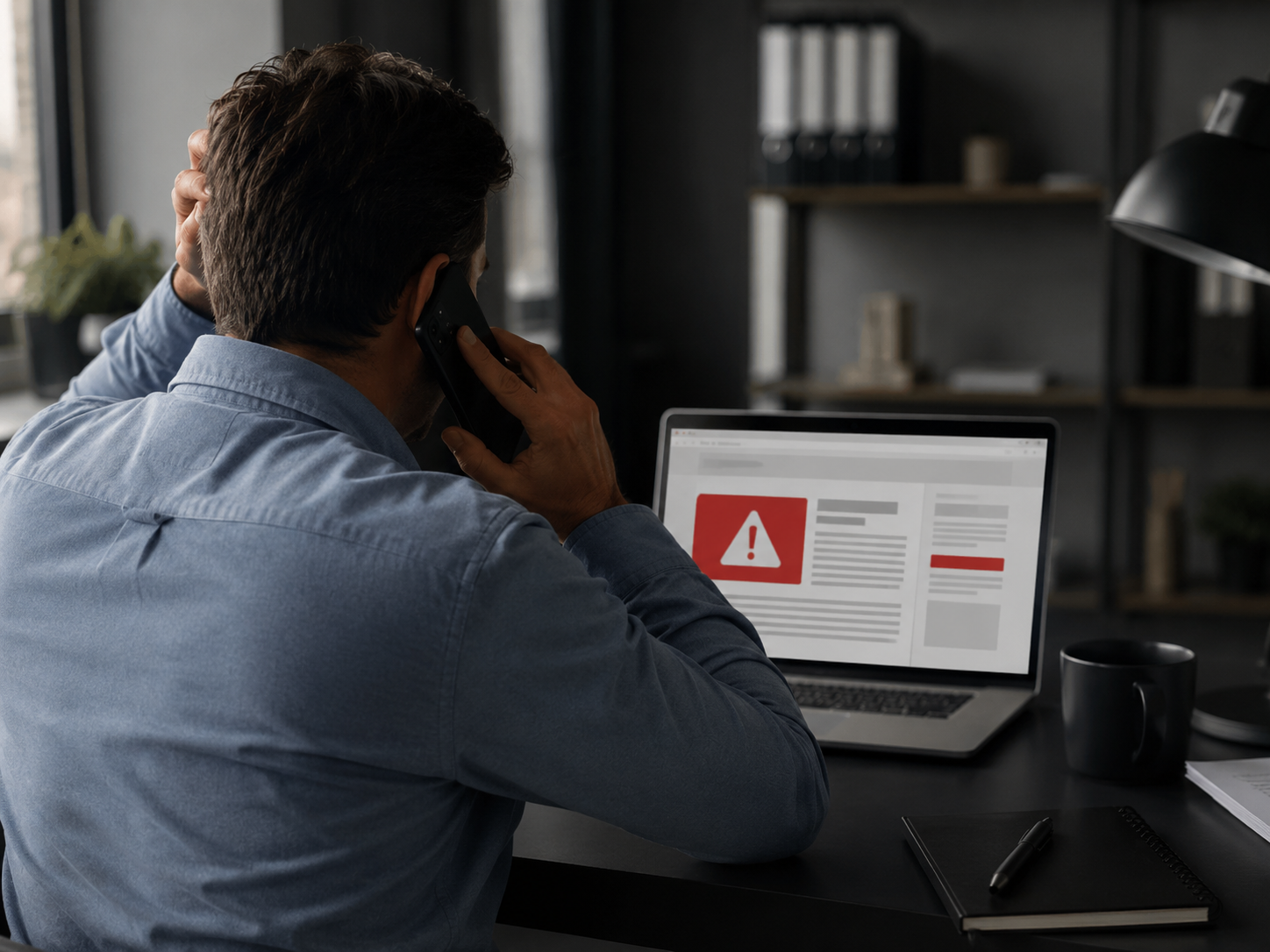
ⓒChatGPT
When negative coverage appears, the first instinct is often to escalate: go straight to the editor-in-chief, demand a correction, push for deletion. In practice, this approach tends to backfire🚨
Newsrooms operate on a clear internal hierarchy. A reporter writes the story; a desk editor reviews, edits, and approves it before publication. That chain of command matters for how you respond. The right first move is always to contact the journalist who wrote the piece — not their manager, not the editor-in-chief. Let the journalist bring the issue to their desk themselves. Bypassing that process creates unnecessary friction and can make a manageable situation harder to resolve.
It's also worth understanding that requesting corrections or deletions puts journalists in a difficult position. Editorial independence is a core professional value in most newsrooms. Asking a journalist to change or remove a published story touches on their credibility and autonomy. That doesn't mean corrections are impossible — it means they require careful handling, not pressure.
Types of negative coverage and how to handle each
Not all negative stories are the same. The right response depends heavily on what kind of story you're dealing with.
Factual errors
Some negative coverage stems from a genuine mistake — a reporter who didn't verify their information before publishing. If you have documentation that clearly contradicts the reporting, this is usually the most straightforward type to address. Contact the journalist directly, share the evidence, and request a correction. For information that can't be fully disclosed — confidential contracts, for example — ask the outlet to include an official company statement acknowledging the inaccuracy, and frame it in a way that cushions the impact on stakeholders.
A more difficult variant is the deliberately false story published by an outlet with an agenda. In these cases, a direct correction request may not get far. A better strategy is to get your company's position into as many other outlets as possible — distribute a rebuttal statement as a press release, and aim for enough volume that your version of events surfaces alongside or above the original story in search results.
Distortion and exaggeration
Some stories are built on real facts but presented in a misleading or unfair way. A public financial filing interpreted in the least favorable light, or a series of critical articles targeting a specific executive, falls into this category. Because the underlying facts are accurate, a flat denial won't work. The more effective response is a clear, well-reasoned explanation of the correct context, paired with a credible plan for addressing any legitimate concerns the coverage raises.
Serious distortion may also qualify for a KPAC claim. One thing to be aware of: in rare cases, an outlet may hint that the negative coverage could be reconsidered in exchange for advertising spend. This kind of arrangement is explicitly prohibited under news portal policies and carries penalties for the outlet involved. Don't engage with it.
Factually accurate but damaging stories
The hardest category to handle is coverage that's accurate — a workplace safety incident, an executive's personal conduct, a genuine business failure. You can't dispute the facts. What you can do is control the response.
Speed matters more here than in any other scenario. Issue a statement quickly, acknowledge the situation directly, and outline concrete steps being taken to address it. The longer the silence, the more the story fills with speculation. Alongside the public statement, work with the journalist to soften the framing where possible — adjusting a headline tone or adding company context to the body of the article is more realistic than asking for deletion.
When a journalist requests an interview on a difficult topic, engage rather than avoid. Declining to comment rarely makes a story go away — and often becomes the story itself. A prepared, measured response, even a limited one, is almost always the better call.
Relationships are your best defense
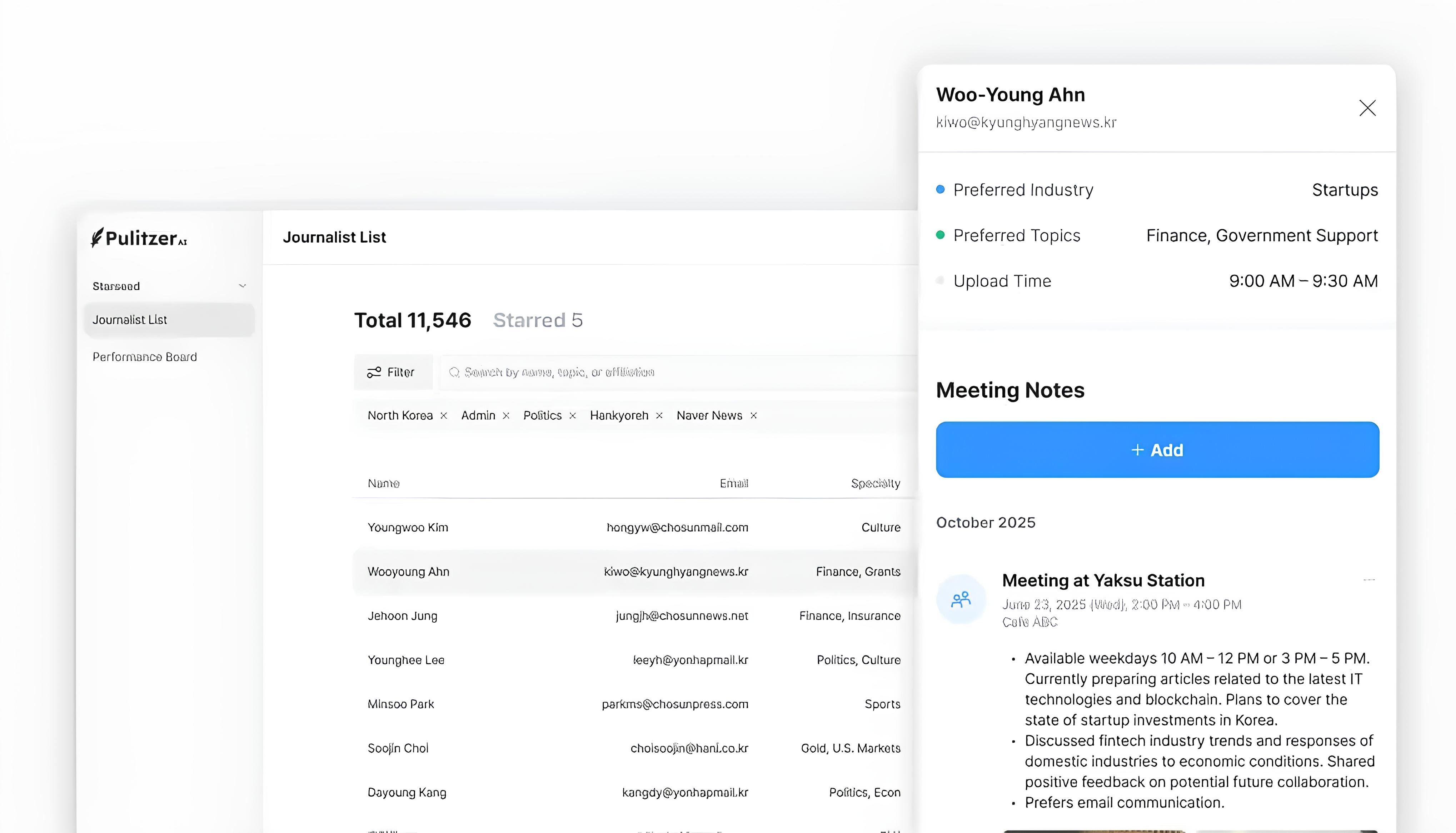
The single most effective thing you can do to prepare for negative coverage is to build strong journalist relationships before you need them. A reporter who knows your company, trusts your PR contact, and has a history of fair coverage is far more likely to reach out before publishing a potentially damaging story — giving you the chance to respond or provide context before it goes live.
This is also why keeping notes on your journalist relationships matters. Tracking a reporter's coverage tendencies, their attitude toward your company, and what you've discussed in past meetings gives you a clearer picture of who might be sympathetic and who might not be. Pulitzer AI's journalist CRM lets you organize exactly this kind of information — coverage interests, relationship history, meeting notes — so that when a difficult story surfaces, you're not starting from scratch. 💡
Know your journalists before a crisis hits✅
Pulitzer AI's Media Bridge lets you track coverage history, past conversations, and journalist preferences all in one place. ➡️ Organize media contacts with Media Bridge
Don't let negative coverage catch you off guard
The most damaging scenarios in PR aren't the ones where the story is bad — they're the ones where you find out too late. Negative coverage spreads quickly, and by the time it reaches social media and online communities, the window for an effective response is already narrowing.
Pulitzer AI's crisis monitoring service tracks news articles, social media, and online communities in one place, alerting you the moment a negative story is detected. Competitor news and industry developments are collected in the same dashboard, so you're not monitoring across multiple channels manually. If a similar issue has come up before, previous cases can be pulled up as reference points when you're working through a response strategy.
🚨Detect early warning signs and manage your crisis history in one place. ➡️ Explore Pulitzer AI Crisis Management
What's next
In the next article, we'll wrap up the series with something more fundamental — why PR matters in the first place, and how to make the case for it inside your own organization. Pulitzer AI is rooting for you. 💪✨
Make PR easier, grow better✨
Pulitzer AI supports your entire PR workflow — from press release drafting to journalist outreach and media monitoring. ➡️ Try Pulitzer AI